

On July 15, the CME FedWatch tool priced the odds of a Federal Reserve rate hike this Wednesday at 10.7%. By July 22, that figure had more than tripled to 34.7% — a jump confirmed independently by both Yahoo Finance and TradingKey's tracking of the same CME data. The Fed hasn't said a word in that window. Oil has.
What the numbers show
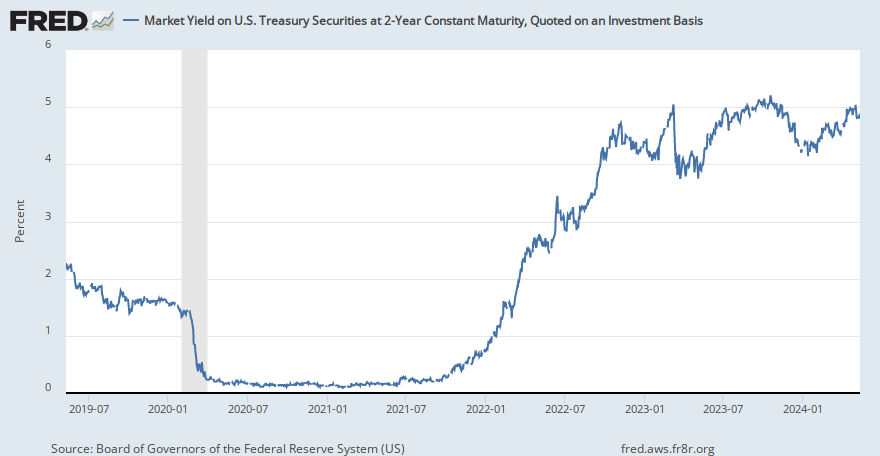
The Fed's target range has sat at 3.50%–3.75% since Chair Kevin Warsh's first meeting on June 17, a unanimous hold, per Fed tracking data cited by CBS News. Two weeks ago, markets treated a repeat hold this Wednesday as close to a formality. That changed fast: independent trackers of the CME FedWatch tool put hike odds at 34.7% by July 22 — more than triple the 10.7% priced on July 15 — and still in the mid-30s as of July 23–24, with hold probability correspondingly down to around 65%, per TradingKey and separate CME-tool tracking. That's an unusually sharp repricing for a two-week span without a major data surprise. The move shows up across the curve too: the 2-year Treasury yield, the maturity most sensitive to Fed expectations, climbed from 4.18% on July 17 to 4.37% by July 23 — a multi-month high, per Federal Reserve H.15 data. The 10-year, which topped 4.6% last week according to the Committee for a Responsible Federal Budget, eased back toward 4.65% by Monday as oil pulled back. And traders aren't just repricing Wednesday: per CNBC, September hike odds have climbed from roughly 52% a week ago to over 80% now, according to Baird strategist Ross Mayfield's read of the CME tool. That's not a one-meeting story anymore.
Why this matters for freelancers
Even if Wednesday ends in a hold — still the more likely outcome — the freelance-relevant damage is partly done. Credit card APRs and most business lines of credit track the prime rate, which moves in lockstep with the fed funds rate, and prime hasn't budged since June. But variable-rate products tied to longer-dated benchmarks, HELOCs and adjustable mortgages among them, have already absorbed months of tighter pricing baked into the 2-year and 10-year moves above. If you're carrying a revolving balance or about to renew a business loan, the cost of that debt is higher today than it was two weeks ago regardless of what the FOMC announces at 2 p.m. ET. For freelancers billing internationally, there's a second-order effect: rate-hike odds tend to pull the dollar higher, and a stronger dollar makes USD-denominated invoices costlier for clients paying in euros, pesos or reais — worth factoring in if you're mid-negotiation on a new contract this week.
Context: how we got here
Warsh's approach is part of the story. He has signaled he'll offer less traditional forward guidance than his predecessors and, at the June meeting, declined to submit individual economic projections — leaving the market with fewer signals to anchor on between meetings, which makes it more reactive to incoming data, according to CBS News. The bigger driver, though, is oil. WTI crude is up roughly 20% for July after the U.S.-Iran conflict flared again this month, with attacks on energy infrastructure and renewed Houthi disruption in the Red Sea reviving supply-risk fears, per Kiplinger. That's enough to keep headline inflation readings hot even as June's CPI and PPI both cooled month-on-month. On Monday, WTI futures for September delivery dropped about 7.5% to settle at $82.61 a barrel and Brent futures for the same month fell roughly 8.7% to $88.36, after Reuters reported that Iran had indicated it would halt attacks as long as the U.S. does too, per CNBC. Analysts aren't taking that at face value: Daniela Hathorn of Capital.com has noted that repeated threats to energy infrastructure and shipping routes have rebuilt a real geopolitical risk premium into oil markets — and this is not the first reported de-escalation this year to follow a previous collapse.
What comes next
The FOMC statement lands Wednesday, July 29 at 2 p.m. ET, followed by Warsh's press conference at 2:30 p.m. ET — both will be carried live on the Federal Reserve's official channels and rebroadcast by the major financial networks. A hold is still the base case, but a hike wouldn't be a shock the way it would have looked two weeks ago, and either way the vote split will say a lot about how much of the committee is leaning hawkish going into September. That meeting is where the real fight may actually be: with hike odds there already above 80%, this week's decision is arguably a preview more than a verdict.
See what a rate move actually costs you
Run your real freelance income and expenses through the calculator before Wednesday's decision changes the math on your rates and debt.
Try the Calculator →