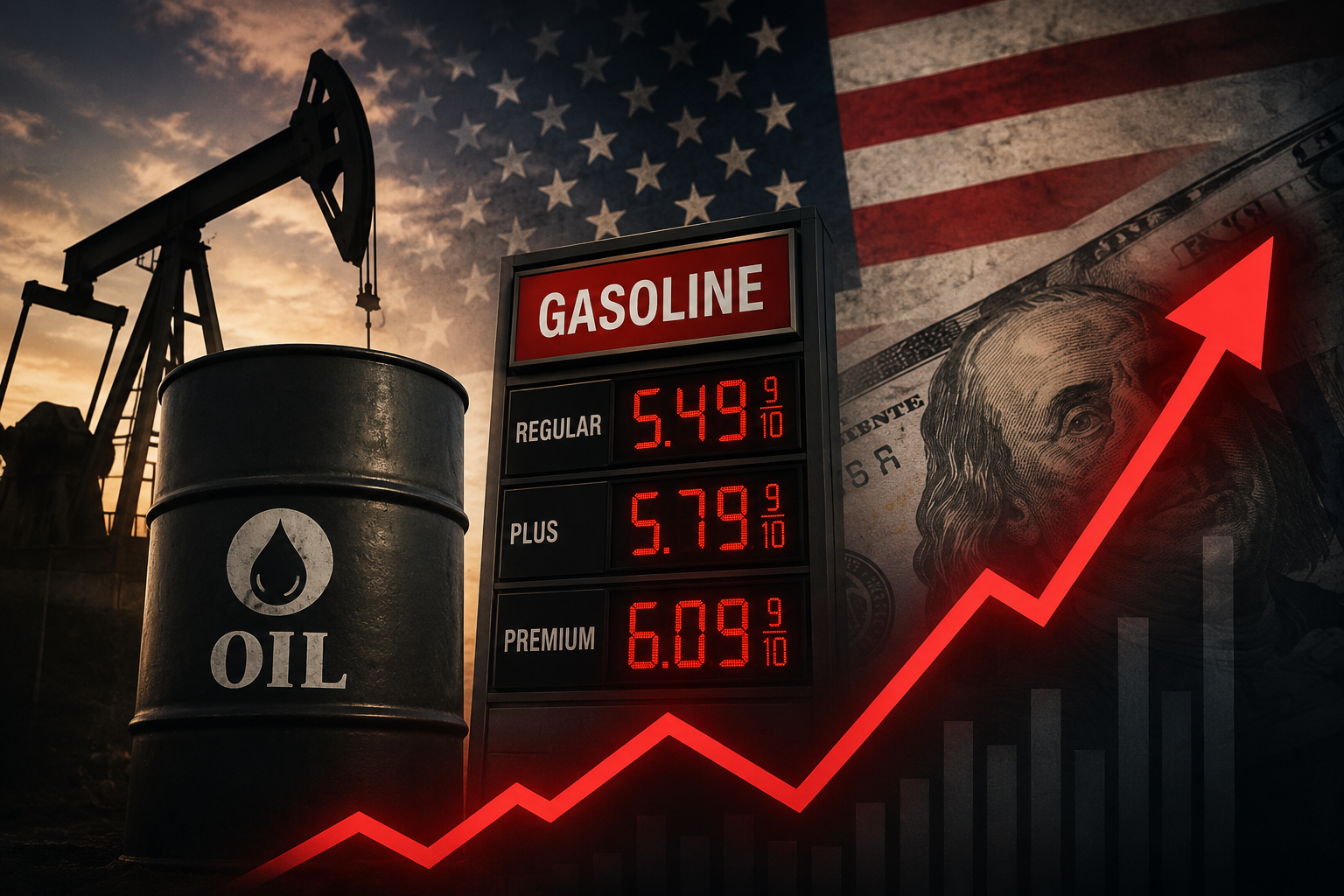

Brent crude topped $100 a barrel Thursday. The same day, the national average for a gallon of gas hit $4.09, up 15 cents on the week, the 10-year Treasury yield broke above 4.7% for the first time this year, and the Dow closed down more than 500 points. Same story, three fronts — and it started with two burning oil tankers in the Red Sea.
What actually happened overnight
Yemen's Houthi rebels said their fighters struck two Saudi oil tankers, the Encelia and the Layla, in the Red Sea early Thursday with a mix of ballistic and cruise missiles and drones. The Saudi Press Agency confirmed a fire broke out at the bow of the Encelia and that the crew is safe; it didn't confirm details on the Layla. The UK's maritime monitoring centre separately reported a tanker struck by an «unknown projectile» near the Saudi coastal town of Al Shuqaiq.
This is the first attack on a vessel since the Houthis announced a naval blockade of Saudi-linked shipping on July 20, in retaliation for Saudi Arabia's blockade of Yemeni ports and a strike on Sanaa's airport carried out by the Saudi-backed Yemeni government.
It also lands in the middle of a separate, larger fight: the US and Iran traded a 12th consecutive night of strikes over the Strait of Hormuz, the choke point that normally carries roughly a fifth of the world's oil and gas. If the Houthis manage to actually shut down Bab el-Mandeb on top of that, you're looking at a quarter of global oil and gas flow squeezed from two directions at once. That's the number that should worry you more than the headline.

Gas: $4.09, and it was already climbing
AAA's national average rose 15 cents on the week to $4.09 a gallon as of Thursday, and most states are now averaging over $4. That's not a one-day spike from the tanker news alone — pump prices have been grinding higher since late June, tracking a crude market that's been unsettled by the broader Iran conflict for weeks. Thursday's attack just added fresh fuel to a fire that was already burning.
| Date | National avg. (regular) | Change vs. prior week |
|---|---|---|
| Jul 2, 2026 | $3.83 | baseline (down ~$0.50 vs. a month earlier) |
| Jul 9, 2026 | $3.84 | +$0.05 |
| Jul 16, 2026 | $3.94 | +$0.10 |
| Jul 23, 2026 | $4.09 | +$0.15 |
AAA's own state-by-state data, current as of the same day, puts California ($5.57), Hawaii ($5.42) and Washington ($5.07) as the most expensive markets, and Indiana ($3.53) and Mississippi ($3.64) as the cheapest. Crude sitting near $90–$100 a barrel doesn't take long to show up at the pump — refiners tend to pass that kind of move through within a couple of weeks.
Mortgages: why a war in the Red Sea touches your rate
The 10-year Treasury yield hit 4.711% early Thursday, up more than 7 basis points from Wednesday's 4.64% — its highest level since January 2025. That matters because 30-year mortgage rates track the 10-year, not the Fed funds rate directly. Freddie Mac's weekly survey, also released Thursday, put the average 30-year fixed at 6.58%, up from 6.55% the week before. Daily rate trackers, which move faster and vary more by lender than Freddie's weekly benchmark, showed anywhere from roughly 6.60% to 6.85% the same day — a reminder that the "average" isn't necessarily what any one lender will quote you.
The mechanism is straightforward, if a little counterintuitive: oil spikes push up inflation expectations, and investors demand a higher yield to hold long-term debt when they think inflation is going to eat into it. Lenders then price mortgages off that higher yield. None of this required a Fed meeting or a rate decision — it happened purely because a tanker caught fire eight time zones away.
Your 401(k): it's not only oil
The Dow Jones Industrial Average fell 506.93 points (0.97%) to 51,711.65 Thursday — its worst day in a month. The S&P 500 dropped 1.21% to 7,408.30, and the Nasdaq fell a sharper 2.15% to 25,137.69.
| Index | Close | Change |
|---|---|---|
| Dow Jones | 51,711.65 | −506.93 (−0.97%) |
| S&P 500 | 7,408.30 | −1.21% |
| Nasdaq | 25,137.69 | −2.15% |
Tesla and Alphabet did most of the damage to the tech-heavy Nasdaq: Tesla dropped roughly 14% after its profit fell despite strong delivery numbers, and Alphabet slid somewhere between 6.5% and 7% (reports varied through the day) even after a solid quarter, because it raised its AI capital-spending forecast and investors are getting twitchy about when that spending actually pays off. Oil is the headline, but it's only half of what hit your balance today if your 401(k) leans toward tech.
What comes next isn't really up to the market
President Trump posted on Truth Social Thursday that the US will «hold Iran responsible» for any further Houthi attacks on shipping, framing the Houthis as an Iranian proxy and threatening a stronger military response if the attacks continue — rhetoric, for now, not a new policy. Oman is separately trying to broker calm directly between Saudi Arabia and the Houthis. Neither of those defuses the actual pressure point: a war that's already closed off one shipping lane now threatens a second one, and that's not a story that resolves because of a strongly worded post.
Three numbers moved today because two ships caught fire in a sea most people couldn't point to on a map. That part isn't going away on its own.
See how a gas or rate spike hits your specific budget
Run your own numbers on Calcugui's calculator instead of guessing at the national averages.
Try the Calculator →