
57,000. That's how many jobs the U.S. economy added in June — against a Reuters-polled forecast of around 110,000. It's the kind of miss that doesn't just move stock futures. It moves the number of pesos, reais, or euros that land in your account the next time a U.S. client pays an invoice in dollars.
A soft print, not a collapse
Nonfarm payrolls rose 57,000 in June, the Bureau of Labor Statistics reported Thursday, well below the roughly 110,000 economists polled by Reuters had expected — other estimates ran as high as 115,000. The damage wasn't limited to June, either: April's initial estimate was cut from 179,000 to 148,000, and May's from 172,000 to 129,000, a combined downward revision of 74,000 jobs that had already been counted once. Professional and business services added 36,000 positions, social assistance 25,000, and health care 22,000. Leisure and hospitality lost 61,000 — a pullback that Trading Economics linked to weaker-than-usual seasonal hiring, with the World Cup cited as a possible factor.
The unemployment rate actually dipped, to 4.2% from 4.3%. That's not the good-news headline it looks like. It happened because the labor force shrank by roughly 720,000 people, not because hiring picked up — the household survey showed employment plunging by over half a million. Participation fell to 61.5%, the lowest since March 2021. When a lower unemployment rate is driven by people giving up the job search rather than people finding work, it's not a number to celebrate.

Why the dollar sold off — and why it's not a rate-cut story yet
Some of the initial chatter online framed this as "the Fed's about to cut." That's not quite what happened. Going into the report, traders had priced in a real chance of a Fed rate hike later this year — the central bank had just held its benchmark rate at 3.50%–3.75% in June while signaling it still expected to tighten further if inflation didn't cooperate. The jobs miss didn't manufacture rate-cut odds out of thin air. It took the hike odds down: the market-implied probability of a September hike dropped to around 50%, from roughly two-thirds priced in just a day earlier. The dollar index fell to about 100.8, down from roughly 101.4 on Thursday and on track for its worst week in over a month.
That's a genuine shift, but it's a "less hawkish" story, not an "easing is coming" one. Treasury yields moved the same way — the policy-sensitive 2-year note fell about 3.5 basis points to 4.13% — which is consistent with traders paring back hike bets rather than pricing in cuts. The next real test is the June CPI report due July 14 — a hot inflation print could put a summer hike back on the table just as fast as this report took it off.
Where the peso landed
The Mexican peso was one of the clearer beneficiaries. It opened the week near 17.50 per dollar, and by Friday morning — in the immediate wake of the jobs data — it had strengthened toward the 17.42–17.47 range, according to data cited by Investing and Bloomberg through Mexican financial outlets.
| Moment | USD/MXN | Context |
|---|---|---|
| Wed, Jul 1 | ~17.50 | Pre-report level |
| Fri, Jul 3 (early) | ~17.42 | Immediate reaction to the miss |
| Fri, Jul 3 (mid-morning) | ~17.47 | Flat vs. Thursday's close |
What it means if you bill in USD
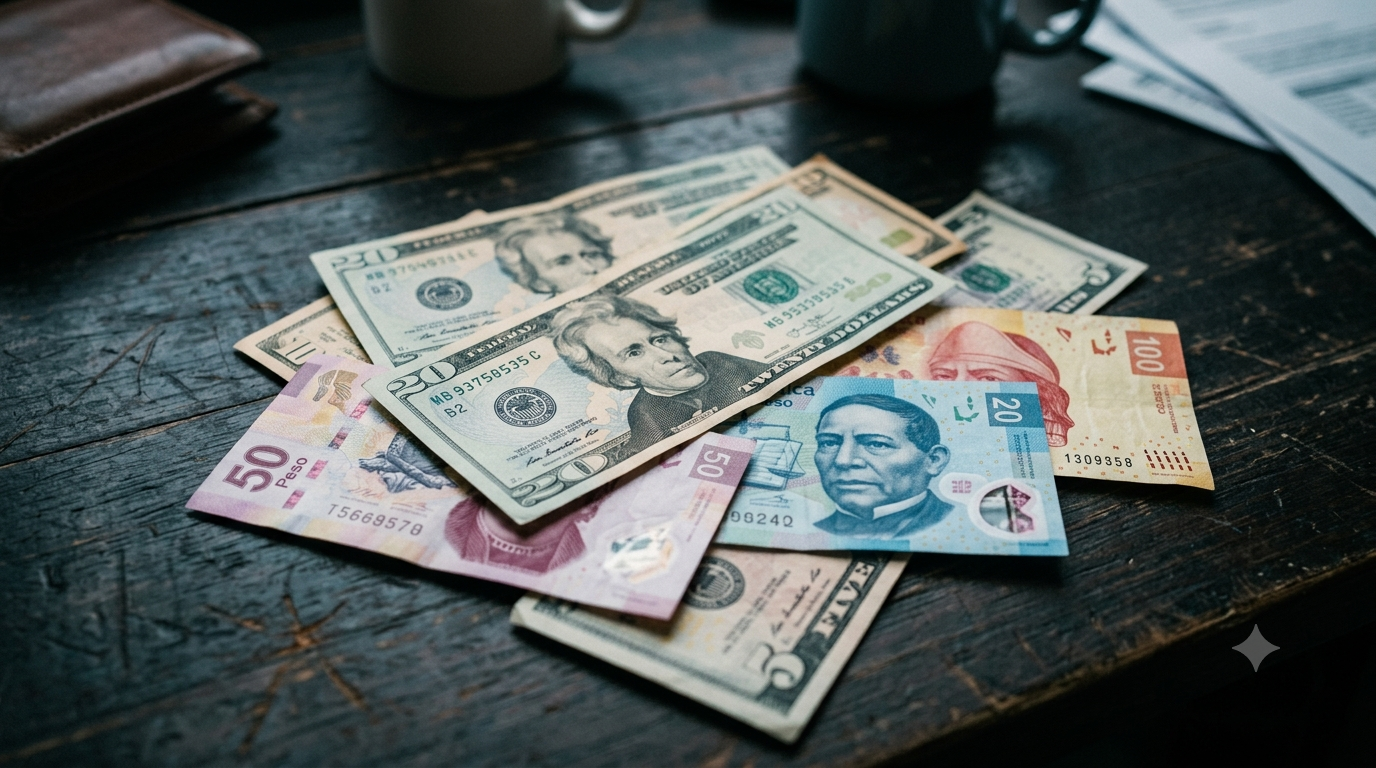
A broad dollar selloff doesn't touch the number on your invoice — you still bill $1,000, or whatever the contract says. What it touches is how many pesos, or euros, that $1,000 turns into when you convert it. At 17.50, that invoice was worth 17,500 pesos. At 17.42, the same invoice converts to roughly 17,420 pesos — about 80 pesos less, call it 0.5%, in the space of two trading sessions. On a single payment, that's not going to change your month. If you're converting balances regularly, though, the direction matters more than the size: a dollar that's losing ground against G10 and emerging-market currencies alike is a dollar that buys a little less local currency every time you cash out, all else equal.
One soft print doesn't rewrite the Fed's playbook — that's still a story that gets written on July 14 and at the next Fed meeting. But for anyone who gets paid in dollars, it's a reminder that macro surprises reach your wallet a lot faster than they reach a policy decision.
Get paid in dollars? Know exactly what you're taking home
Run your next invoice through today's real exchange rate before you accept the job — not the rate from the day you quoted it.
Try the Calculator →